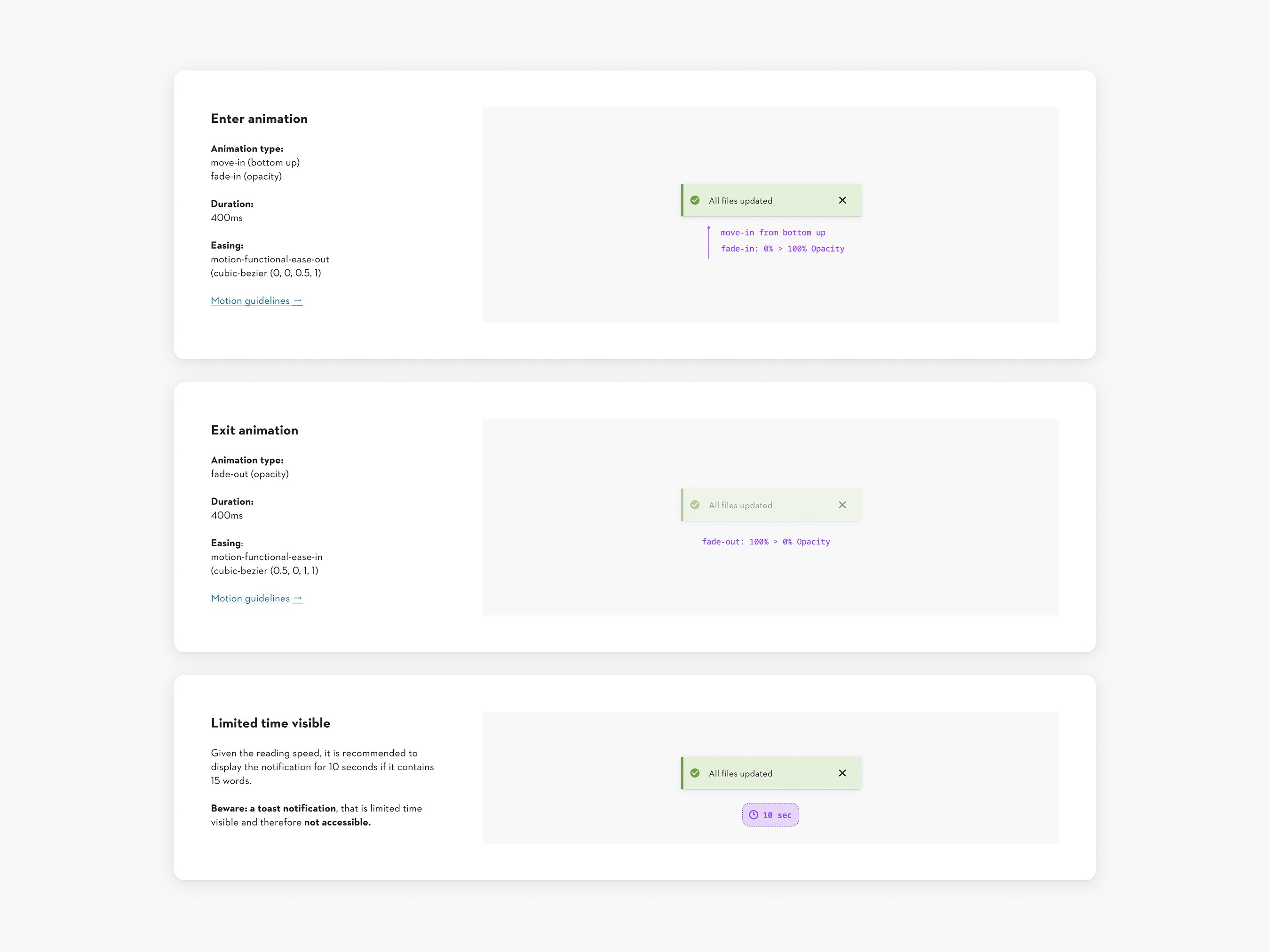
STIHL Design System
Design System, UI Design, Accessibility
As part of the design team at Moccu, I contributed to the development of a scalable design system to unify UI elements and improve consistency across digital products. My focus was on accessible, brand-aligned components, clear documentation, and structured handoff processes to ensure long-term usability and maintainability.
Role
Senior UI Designer, Design System Designer
Team
Hannes Kneidinger – Senior UI Designer / Moccu
Hendrik Hohenstein – Senior UI Designer / Moccu
Rosa Groot – Senior UX Designer / Moccu
Mareike Schmidt – Project Management / Moccu
Kathrin Köhler – Experience Design Lead / Moccu
Contribution
Design system strategy, UI components, accessibility standards, documentation and handoff
Duration
2020–2025
The Goal
The objective was to establish a scalable and accessible design system that could serve as the foundation for STIHLs digital products across the organisation.
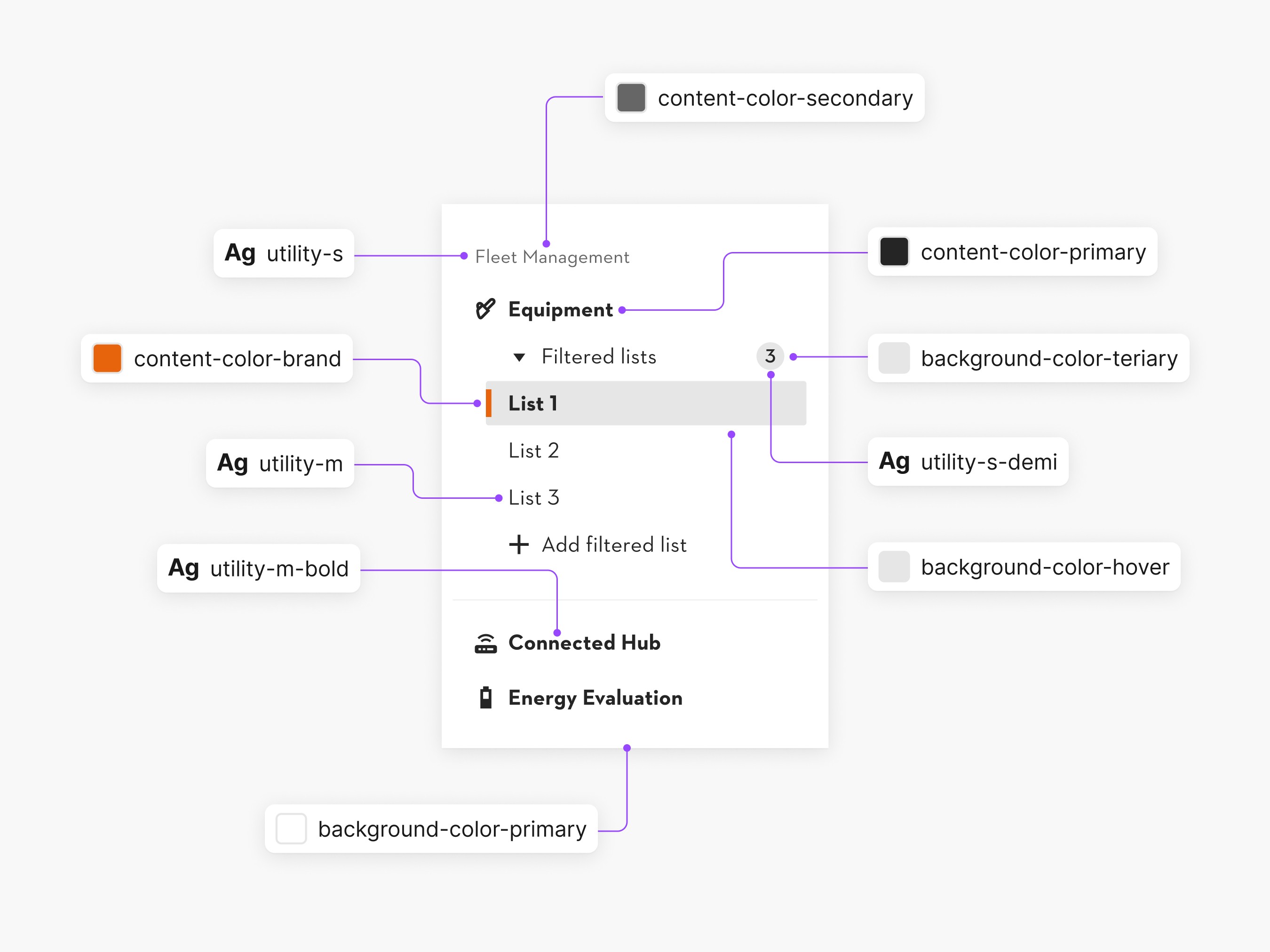
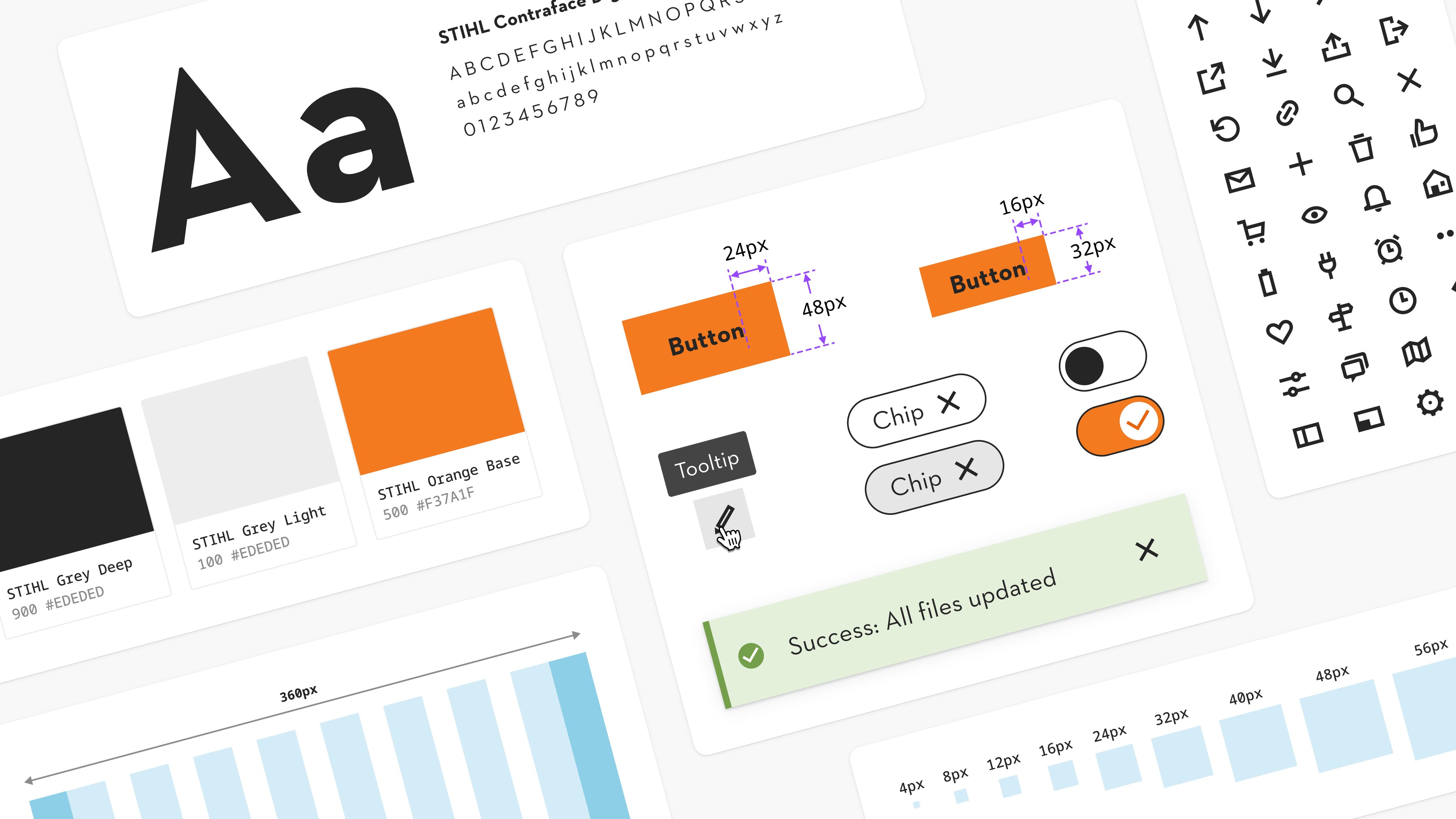
The system provides structured fundamentals (such as colours, typography, grids and iconography) as well as reusable core components. It enables teams to work more efficiently, reduce redundancy and ensure a consistent brand experience across platforms.
The Challenge
Large organisations often face fragmented interface solutions developed across different teams. Creating a shared foundation required balancing clear guidelines with sufficient flexibility for product-specific needs. Another key aspect was aligning design decisions with technical feasibility while maintaining accessibility standards and strict brand requirements.
The Approach
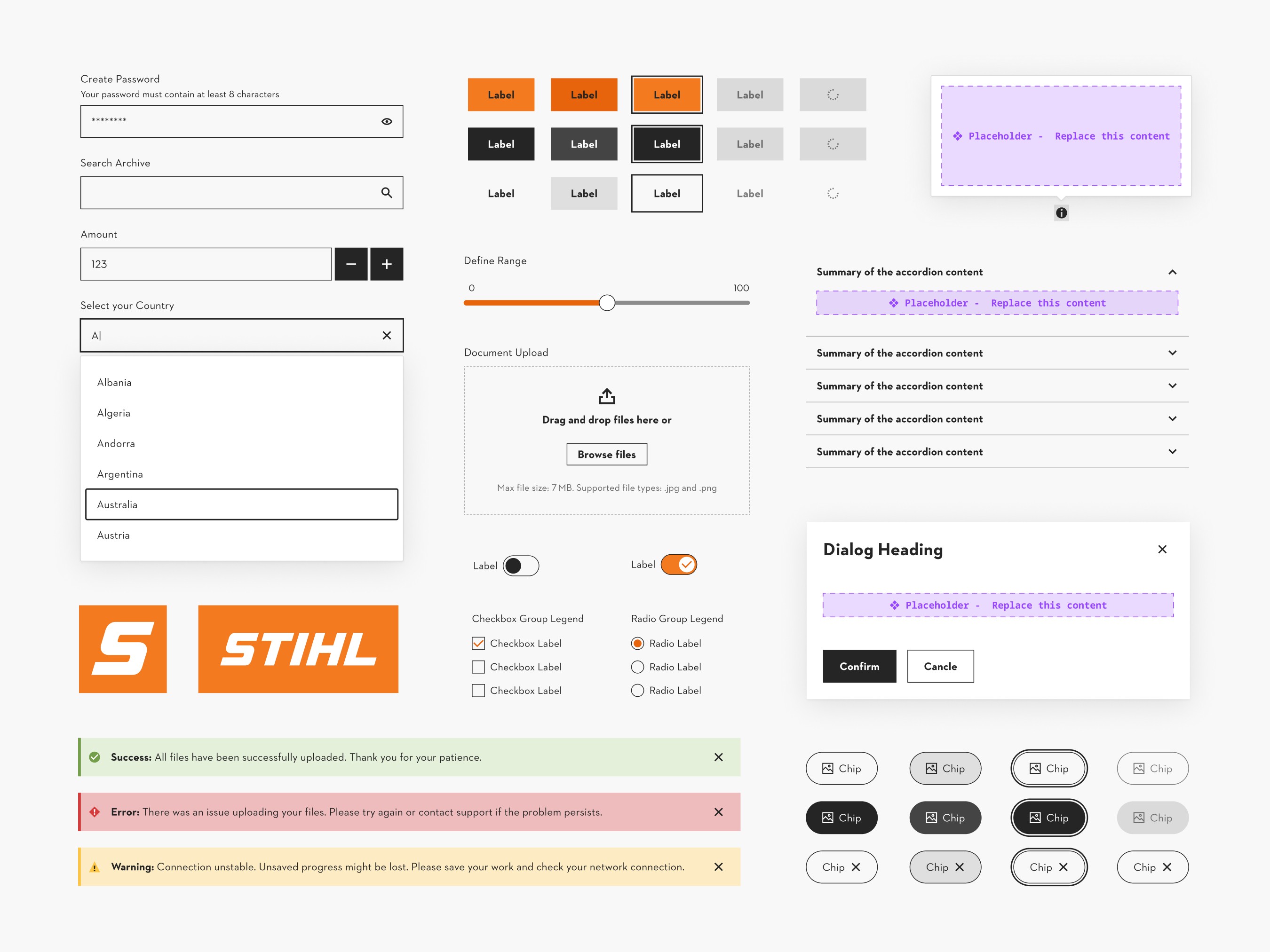
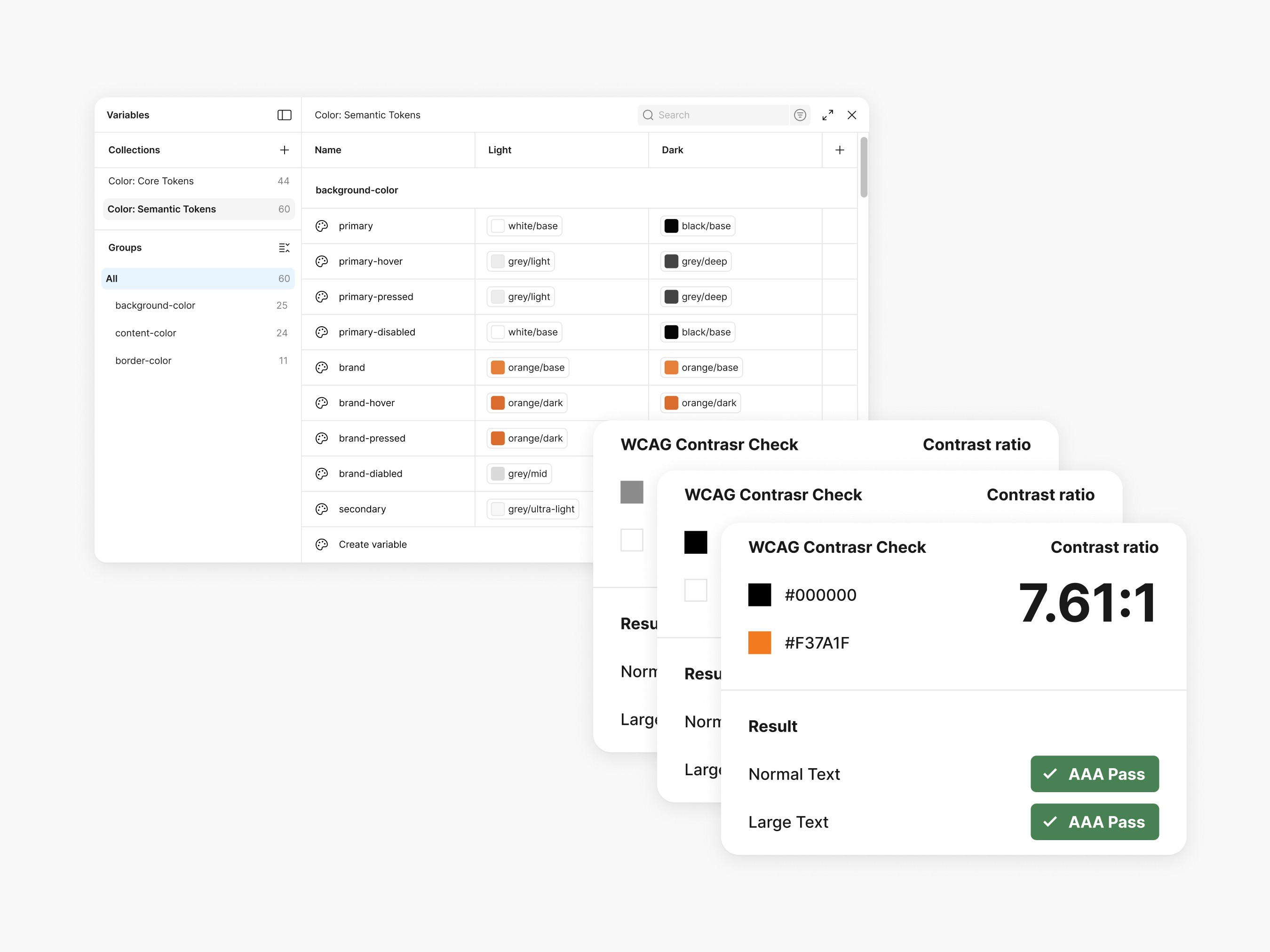
The design system was built iteratively, starting with essential core components and expanding over time. A structured pattern library was created, including reusable UI components with defined variants and states. Clear documentation and usage guidelines support consistent implementation across teams. Accessibility considerations were embedded from the outset, including semantic structures and scalable colour systems suitable for different display modes. Close collaboration between design and development ensured that components were both usable and technically robust.
The design system provides a shared foundation for digital products, reducing repetitive work and enabling teams to focus on innovation rather than rebuilding basic interface elements. Reusable components improve consistency, support accessibility compliance, and streamline workflows across design and development.
As with any design system, the work is ongoing: continuous refinement and iteration ensure that components remain up to date and adaptable to evolving requirements.